


CHOOSING THE RIGHT FABRIC
What Is The Bast Fabric For My Footstool Or Ottoman?
The best fabric for footstools and ottomans combines a look and feel that you love with durable practicality.
🕓 5 min read | Expert advice from our design team
 Quick Answer
There isn’t one universally best fabric for a footstool or ottoman but upholstery fabric does need to be suitable for the level of wear expected. A good place to start is to consider how you will use the ottoman and how long you intend it to last. Durability, cleanability and maintenance matter alongside appearance. Homes with pets and children may need extra thought but ultimately the best fabric is one that works for the décor and the household.
Find the right fabric for your ottoman ⟶
Extended Answer
There isn’t really a list of ‘best’ fabrics for an ottoman as there are so many considerations. What one customer thinks is paramount may not be the highest priority for another. We always begin with asking what we want the fabric to do.
For instance, an occasional bedroom footstool or blanket box that is not used daily and a high-traffic storage ottoman for daily use as a coffee table are both upholstered pieces but the fabric is living two very different lives.
Choose Fabric For How You’ll Use Your Ottoman
It’s sometimes best to define how frequently you will use your ottoman. Everyday use in high-traffic areas will likely benefit from a more durable fabric, whereas a little used ottoman for staging a tray of décor can carry a more light-weight fabric. If you intend to use your ottoman or footstool for a footrest or extra seating, it’s worth choosing something that has a high rub count and is easily cleaned or stain protected. Children, pets and busy living spaces all have specific requirements. Try creating a practical brief before falling in love with anything!
 DESIGN TIP Don’t judge upholstery fabric from a screen alone. Look at a physical sample in the room where the ottoman will live, ideally at different times of day. Colour and texture can look surprisingly different under natural and artificial light.
It Doesn’t Have to Be upholstery Grade Fabric
Many of the designers and customers that we help want a more fashion led look to their ottoman and printed linen is often send to us for upholstery onto ottomans. However, not every attractive textile is suitable for furniture – satin and silk don’t upholster ver well and are too fragile for everyday use and have a very low Martindale rub count.
A higher Martindale rub count isn’t automatically better but it gives an idea of the durability of a fabric when compared with its intended use. Far more important is a fabrics composition – this relates to fire retardancy more than anything and we discuss this in another article.
 EXAMPLE Ottoman A: end-of-bed blanket box, mainly decorative with occasional use. Ottoman B: centre of a children’s play room, extensive use with the possibility of stains from food, drink or art supplies. You can see that the uses differ vastly and the fabric should be matched to it’s intended use.
Think About How you Want It To Look (The Fun Part!)
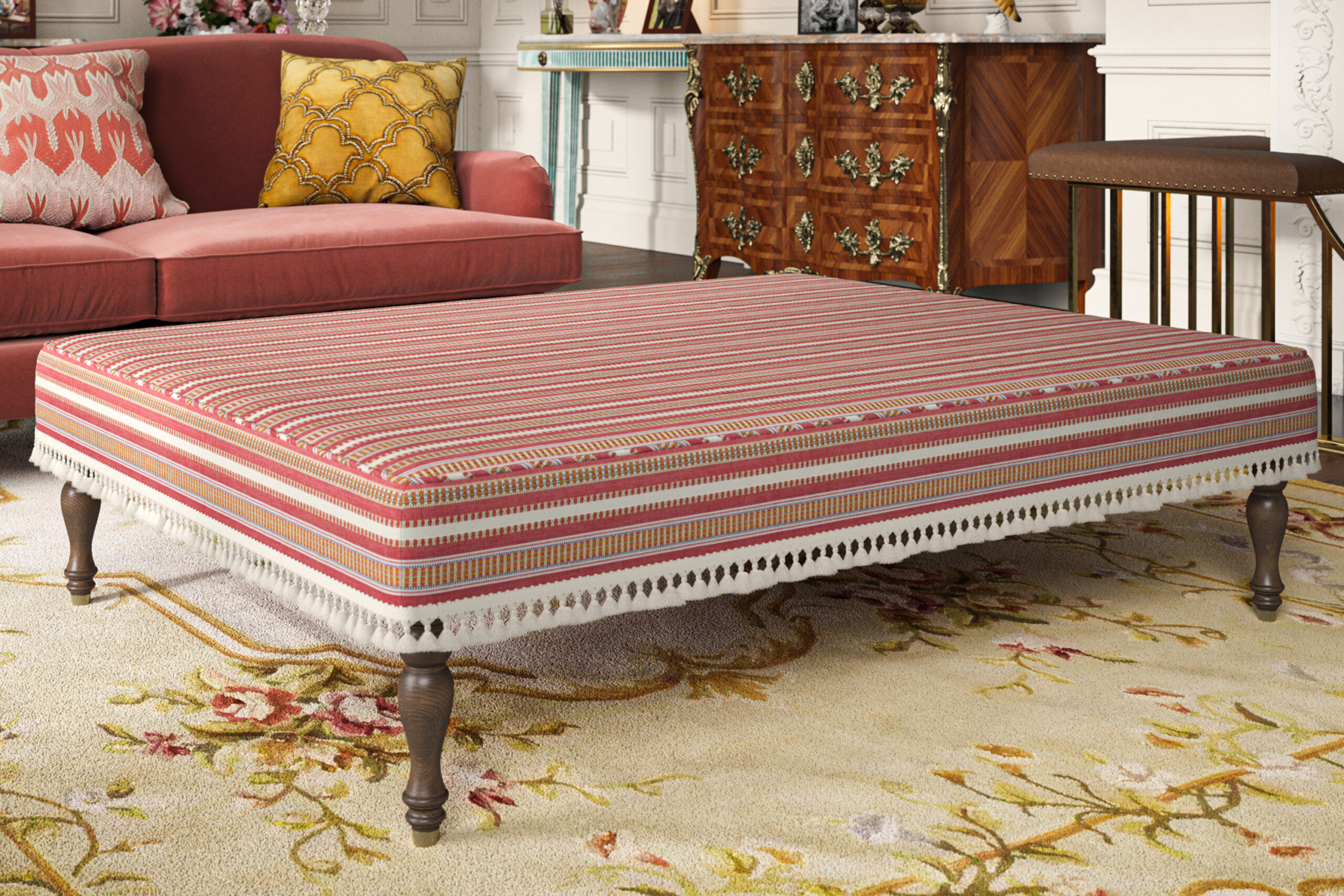
Firstly you can consider if you wish the ottoman to blend in or become a feature. Thinking about how much fabric will be visible is especially important on larger ottomans as is the scale of the pattern. Using a large scale pattern on a small ottoman may mean you never see the whole pattern effect whilst a small pattern on a large ottoman may get lost.
Upholstery details such as buttoning also affect fabric and style choice. We would not recommend buttoning a striped fabric for instance as it alters the course of the stripe. Whilst this can be a pleasing effect in itself it is a good demonstration of how form and detail affect how the pattern will sit when upholstered.
The main decision process for narrowing down the fabric choice once its use is locked in might begin with plain vs patterned fabric, smooth vs textured and the colour.
 BALANCE TIP Balance practicality with personality. The hardest-wearing fabric isn’t automatically the best choice. Think realistically about how much wear your ottoman will receive, then choose from fabrics suitable for that use rather than sacrificing the colour, texture or pattern you really want simply because another fabric has a higher performance rating.
Expert Tip
Don’t forget to handle the fabric. An ottoman is furniture you touch and interact with, so the way a fabric feels can be just as important as how it looks — particularly if it’ll regularly be used as a footrest or additional seat.
Key Takeaways
- There is no single best ottoman fabric
- Start with how the furniture will actually be used
- Choose fabric suitable for the expected level of wear
- Consider cleaning and maintenance requirements
- Colour, pattern and texture have a greater impact across larger ottomans
- Always assess appearance and practicality together
- Consider a stain protection element to seal any fabric as an additional measure
IN THIS GUIDE
• Start with how you’ll use it
• Understand durability
• Consider colour and texture
• Balance beauty with practicality
Still Need Help?
Chat with our design team for free, expert advice tailored to your space.

RELATED TOPICS
• Choosing Upholstery Fabric
• Storage & Practicality
• Made to Measure & Bespoke
• Delivery & Ordering
• Made to measure options
POPULAR QUESTIONS
• Can I supply my own fabric for my ottoman?
• What is fabric protector (stain guard)?
• Is my fabric’s composition suitable for an ottoman?
FURTHER READING
Can I supply my own fabric?
LEARN MORE →
FURTHER READING
Which ottoman style should I choose?
LEARN MORE →
FURTHER READING
What size ottoman should I buy?
LEARN MORE→