


CHOOSING THE RIGHT SIZE
What Size Ottoman Should I buy?
Ottomans come in many shapes and each can influence the feel of your room.
Here’s how to choose an ottoman shape to suit your home.
🕓 5 min read | Experienced advice from our head stylist, Sheryl.
 Quick Answer
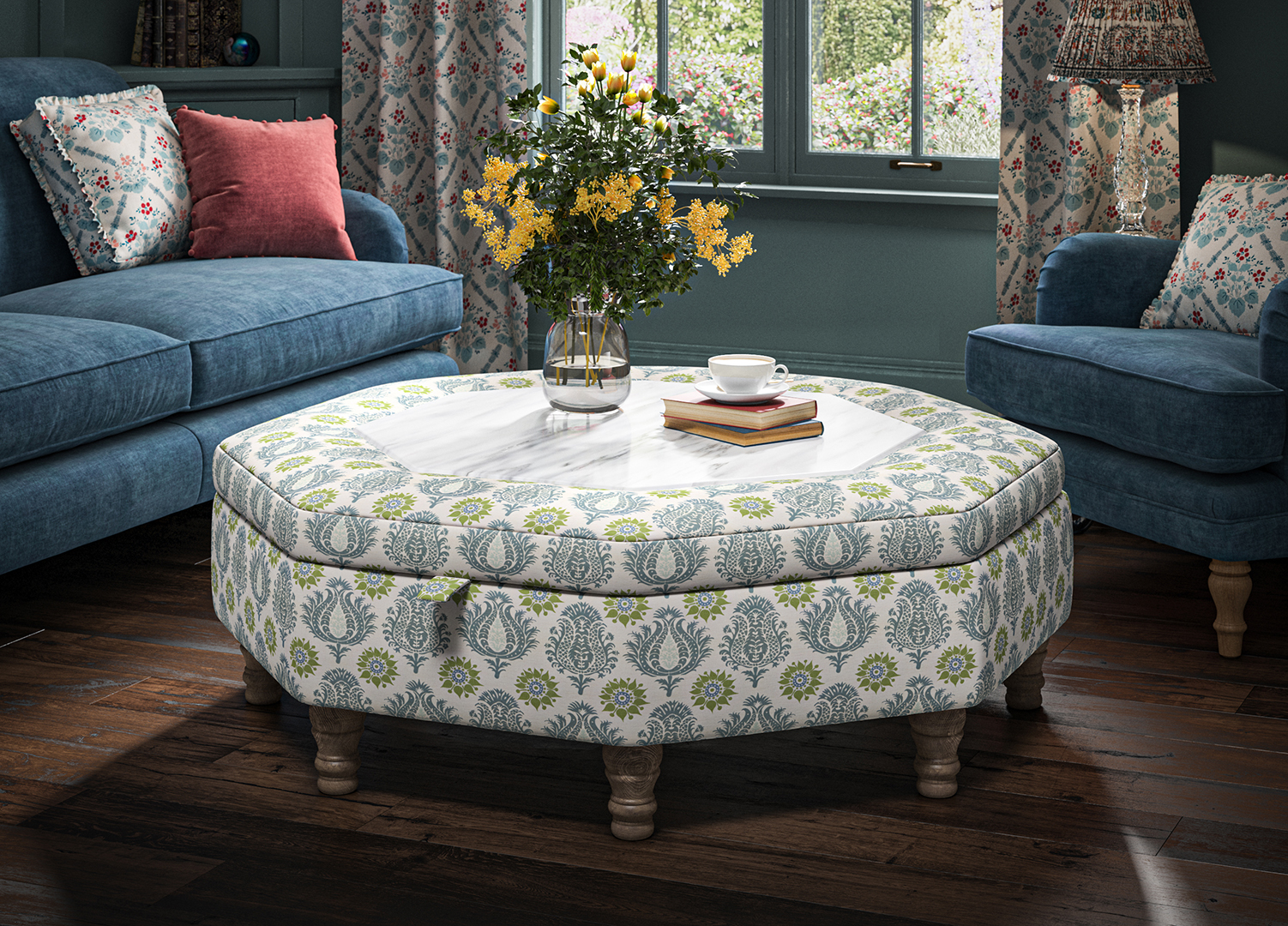
The best ottoman shape depends on the layout of your seating and how you use the room. Rectangular ottomans suit most situations and standard sofas and are ideal as a coffee table. Round and octagonal ottomans work beautifully in rooms where seating is arranged around a central point, helping conversation flow. Square ottomans are a great choice for smaller sofas and ‘cuddle’ chairs, snugs and where balanced proportions are key.
See sizing guide ⟶
Extended Answer
The shape of your ottoman is linked to how you use your room and the arrangement of your existing furniture. It’s also governed by how much room you have to walk around it.
After advising many customers on ottoman shape, here’s our take:
Why Shape Matters
The right shape influences much more than appearance. The right ottoman should be easy to walk around and complement the furniture arrangement, suiting the way you use your room every day. The wrong shape can affect space, flow and proportion of your room and directly influence how you feel using the space.

DESIGN TIP Look at how your furniture is positioned. Facing sofas? Corner sofa? Snug, reading chair or open-plan room – the seating tells you the answer
Consider how you’ll walk around it
A recent customer complained that he banged his shin into the corner of his old, previous ottoman every time he entered his room to sit down. We suggested replacing it with a circular or octagonal ottoman to open up his walkway and avoid any protruding corners. He was thrilled with his new octagonal ottoman!

EXAMPLE Many of our customers have facing sofas – a rectangle ottoman works very well here as it splits the room into thirds visually and echoes the shape of the sofas themselves providing consistency and balance.
Think about visual weight
This is something al lot of stylist’s don’t talk about:
Large rectangles feel substantial (especially if they provide down-to-the-floor storage.
Round ottomans feel ‘lighter’
Octagons sit somewhere between the two (and provide a great talking point as they are unusual).
 STYLIST’S TIP Cut cardboard or newspaper shapes out and lay them on the floor where the ottoman will sit and see how you feel with each. We provide full dimension pdfs for each of our products if you need some measurements to work with as a starting place – just ask.
From Our Workshop
Customers often start by asking which shape looks best, but we’ll usually ask about the room first. The arrangement of your seating, the way you move through the space and how you’ll use the ottoman every day tell us far more than the room dimensions alone.
Key Takeaways
- Think about every day use – consider how you will walk around it
- What shape is the gap left by your other furniture?
- Use cardboard templates to see how each shape looks
- Remember size can be customised whatever the shape so that it fits perfectly
IN THIS GUIDE
• Start with the space you have
• Consider the function
• Why shape matters
• Practical visualisation advice
• Made to measure options
Still Need Help?
Chat with our design team for free, expert advice tailored to your space.

RELATED TOPICS
• Choosing Upholstery Fabric
• Storage & Practicality
• Made to Measure & Bespoke
• Delivery & Ordering
• Made to measure options
POPULAR QUESTIONS
• What is the standard size ottoman?
• How much space should I leave around an ottoman?
• Can I get an upholstered ottoman made to a custom size?
FURTHER READING
What height should my ottoman be?
LEARN MORE →
FURTHER READING
What size of ottoman should I Buy?
LEARN MORE →
FURTHER READING
What is the best fabric for an ottoman?
LEARN MORE→